
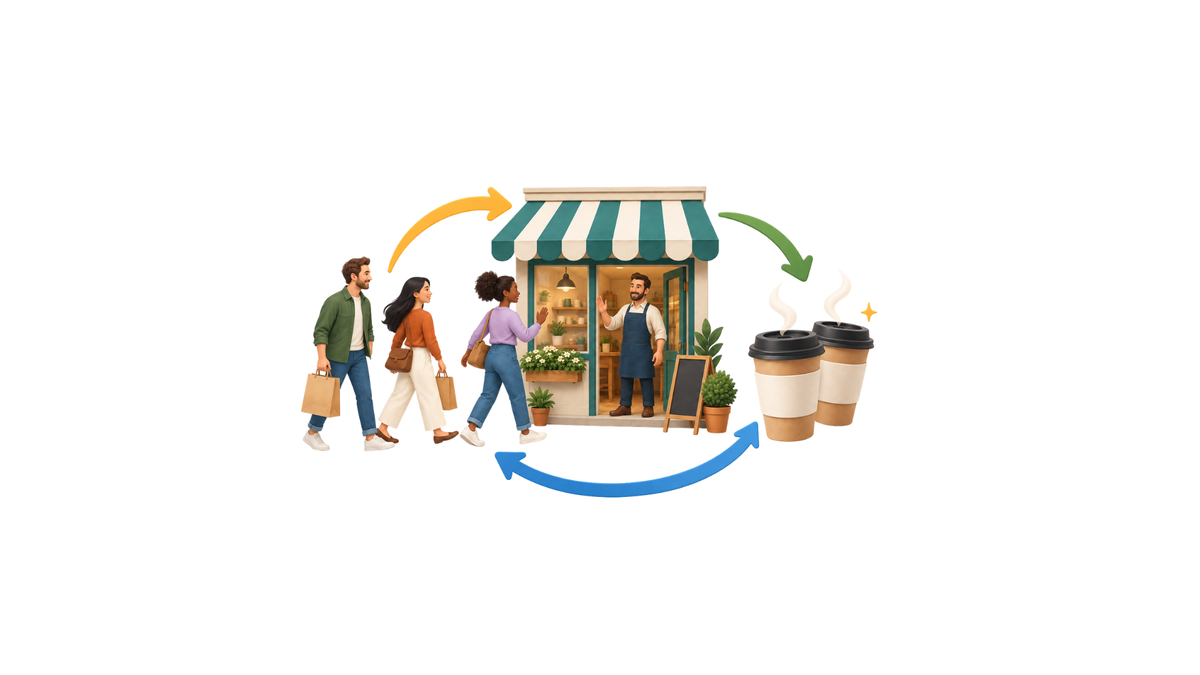
Why repeat visits matter more than points
A loyalty program is only working if people come back. Not if they collect points, not if they redeem a discount once but if a second, third, and fourth visit show up in your sales. That is the number worth tracking, and it is the one most programs never report.
The economics are unforgiving for small operators. For small businesses, bringing customers back can be just as important as attracting new ones. According to research cited in Shopify’s guide to retail loyalty programs, acquiring a new customer can cost five to 25 times more than retaining an existing one, while a 5% increase in customer retention can boost profits by 25% to 95%. For a café, salon, or neighborhood shop with a limited marketing budget, these figures highlight the value of giving existing customers a clear reason to return.
For a café, a salon, or a single-location shop, that gap is the whole business case. With limited daily foot traffic, customer retention and repeat visits depend on giving someone a concrete reason to return soon — this week, not someday.
How loyalty programs help seasonal businesses win back customers fast
A ski rental shop, an ice cream counter, a garden center, a beach-town café these businesses don't get twelve months to earn a second visit. They get eight to fourteen weeks. A points ladder that pays off after ten purchases is useless when the season ends at purchase four.
Short windows flip the math. The goal isn't lifetime value accumulated slowly; it's getting visit two to happen inside a week or two of visit one, while the customer is still nearby and still in the habit. Endear reports that up to 60% of monthly customers never come back for a second purchase — in a seasonal business, that drop-off is permanent until next year.
What works in a compressed window:
- Limited-time rewards
"Free scoop on your next visit, valid 14 days" beats an open-ended points balance. A deadline is the mechanism. - Early visit milestones
Put something real at visit two or three, not visit ten. - Timed reminders
A push notification to a wallet pass on a quiet Tuesday is cheap and lands on the lock screen.
Scannable digital passes make this practical. The customer adds a pass to Apple Wallet or Google Wallet at checkout, staff scan it on the next visit, and visits get tracked without physical cards or a dedicated app to download a real barrier when someone is in town for three days.
Coffee shops run the same playbook year-round: fast rewards, frequent scans, small reminders. Customer retention and repeat visits come from building a habit quickly, not from a long rewards ladder nobody finishes.
Using loyalty to fill slow weekdays without discounting every order
Tuesday at 2 p.m. is the cheapest traffic you will ever buy. The espresso machine is already on, the dining room is already staffed, the stylist's chair is already paid for. A visit that lands on a slow weekday costs you almost nothing extra in labor, which is exactly why it is the right place to spend a reward instead of cutting prices across the board.
Mailchimp’s guide to building an effective loyalty program explains how rewards can encourage repeat purchases by giving customers a reason to return. Applied to quieter weekdays, a café could put this approach into practice by offering double stamps on Wednesdays. When a staff member points out at checkout that the visit has brought the customer closer to their next reward, the customer has a clear incentive to plan another Wednesday visit.
Weekday-only triggers work better than blanket discounts because they move traffic instead of training people to wait for a sale. Bonus stamps on slow days, a member-only weekday pastry, early booking windows for Monday and Tuesday appointments, or a fourth-visit reward that only counts midweek visits all of these shift demand without touching your menu price.
The operational catch is recognition. It has to happen in seconds, at the register, without an app download. A scannable digital pass makes this easy: one scan logs the visit, applies the weekday bonus, and updates the balance the customer sees. That quiet mechanic is what turns off-peak experiments into steady customer retention and repeat visits.
Reward ideas that build habits without discounting every purchase
A blanket discount trains people to wait for the next markdown. A reward tied to a reason to come back trains a habit.
Brevo's analysis of loyalty programs found that 35% of consumers planned to cancel memberships in 2024 because the rewards weren't compelling enough a sign that discount-only structures wear out fast. Targeted incentives and personalized outreach move repeat purchases further than across-the-board price cuts.
A simple way to choose: reward the next visit, a milestone, or a specific behavior never every transaction.
- Next visit A coffee shop offers a free size upgrade on the customer’s next order, valid Tuesday through Thursday. The extra cost is small, and the offer gives customers a reason to return on quieter weekdays.
- Milestone A salon rewards customers with a complimentary add-on treatment after five appointments. Each visit brings them closer to a clear, achievable reward.
- Behavior A restaurant rewards a specific action, such as coming in for a weekday lunch, trying a new dish, or referring a friend. The reward gives customers a reason to repeat that action, without requiring a points system.
Non-discount rewards that hold up well in practice: free upgrades, bonus add-ons, early access to new items or booking slots, member only perks like priority seating, and named visit milestones.
Match the reward to how the business earns. High-frequency, low-ticket operators (cafés, bakeries, quick service) do better with fast, small wins every few visits. Low-frequency, high-ticket services (dentists, detailing, studios) do better with one meaningful perk at the milestone, plus a timed reminder before the next appointment window.
How restaurants, retail stores, and service businesses use scannable digital passes
A digital pass lives in Apple Wallet or Google Wallet, so there's nothing to download and nothing to lose in a wallet drawer. Staff scan the pass at the register, the visit is recorded, and the balance updates on the customer's phone. That single scan is what turns a strategy into working mechanics the behavior gets captured, the reward gets triggered, and the customer sees recognition before they leave the counter.
Cafés and Restaurants
Cafés and restaurants can reward customers based on how often they visit. For example, a digital stamp card that offers a free tenth coffee after nine purchases can be paired with special perks on quieter Tuesdays and Wednesdays. This encourages customers to visit regularly and choose days when the business is less busy.
Clothing and Cosmetics Stores
For clothing and cosmetics stores, turning a first purchase into a second is an important step. A digital loyalty pass issued at checkout can include a reward for the customer’s next visit. As shopping preferences become clearer, offers can be tailored to the products they enjoy. For example, a customer who buys skincare products could receive a complimentary sample with their next purchase. Regular customers could also enjoy perks such as early access to new collections.
Hair and Beauty Salons
At hair and beauty salons, repeat visits follow customers’ personal care routines. A loyalty program should therefore fit naturally around their usual appointment intervals. A reminder sent when the next treatment is due can be paired with a small perk for booking within a specific timeframe. For example, a customer who books their next appointment within the recommended interval could receive a complimentary add-on hair treatment.
None of this requires physical cards or a dedicated app, which is where most small programs quietly fail. Loyaltify's platform issues these passes as customizable wallet passes with configurable reward rules, so the same setup supports stamps, tiers, or date-based reminders depending on how customer retention and repeat visits actually happen in your business.
How to turn deal-seekers into regulars
Some customers only respond to price. They show up for the opening-week discount, redeem it, and disappear. That's not a character flaw — it's a signal that nothing in the visit gave them a reason to come back. Most shoppers belong to at least one loyalty program, yet a large share of first-time buyers never make a second purchase. Enrollment isn't the problem; the follow-up is.
The fix is timing and relevance, not a bigger discount. Personalized outreach and targeted incentives beat blanket price cuts, and that lines up with how habits actually form: recognize the first return fast, then make the second and third feel earned.
A practical sequence for a coffee shop, salon, or quick-service restaurant:
- Visit 1: pass added to Apple Wallet or Google Wallet at checkout, one scan, no signup form.
- Visit 2 (within 14 days): a small, specific reward — a free pastry, not 10% off everything.
- Visit 3+: switch to visit-based milestones so the reward tracks real behavior.
Keep messages short and the redemption rule obvious: one line, one action. Customer retention and repeat visits improve when people know exactly what they're working toward and when the reward arrives while the last visit is still fresh.
Frequently Asked Questions
What brings customers back: points or rewards?
Points are a way to show customers how close they are to a reward. What matters most is that the reward feels appealing and achievable. A clear offer like “Your fifth coffee is on us” tells customers exactly what they can earn and how to get there. A reminder timed around their usual visiting habits can also encourage them to return.
Where should a small business start with personalization?
Start by separating first-time visitors from regular customers. Offer newcomers a small perk they can use on their second visit. For regulars, consider a complimentary treat or an exclusive benefit that matches their preferences. Personalization doesn’t have to be complicated; the offer simply needs to feel relevant to the customer.
How do I know if my loyalty program is working?
Look beyond how many people join and track how many actually come back. Monitor the percentage of customers who make a second visit, the average time between visits, and the rewards redeemed. Compare these figures over time, taking seasonal changes and promotions into account. If customers return more often and the additional sales cover the cost of rewards, your program is serving its purpose.
Do I need to offer a discount on every visit?
A free size upgrade, a complimentary treat, an add-on treatment, or early access to new products can also give customers a reason to return. Choose a benefit that customers value and your business can afford to offer consistently.
Do customers need to download a separate app?
With Loyaltify, customers can add their loyalty passes to Apple Wallet or Google Wallet. They can join your program without downloading a separate app or carrying a physical card.
Which businesses is it suitable for?
It suits businesses customers are likely to revisit, including cafés, restaurants, clothing and cosmetics stores, hair and beauty salons, and car washes. Set reward milestones around your business’s natural visit frequency: a goal customers can reach within a few days at a café might span several appointments at a salon.
Give your customers a new reason to come back.
Start free with Loyaltify and create your first digital loyalty pass.