
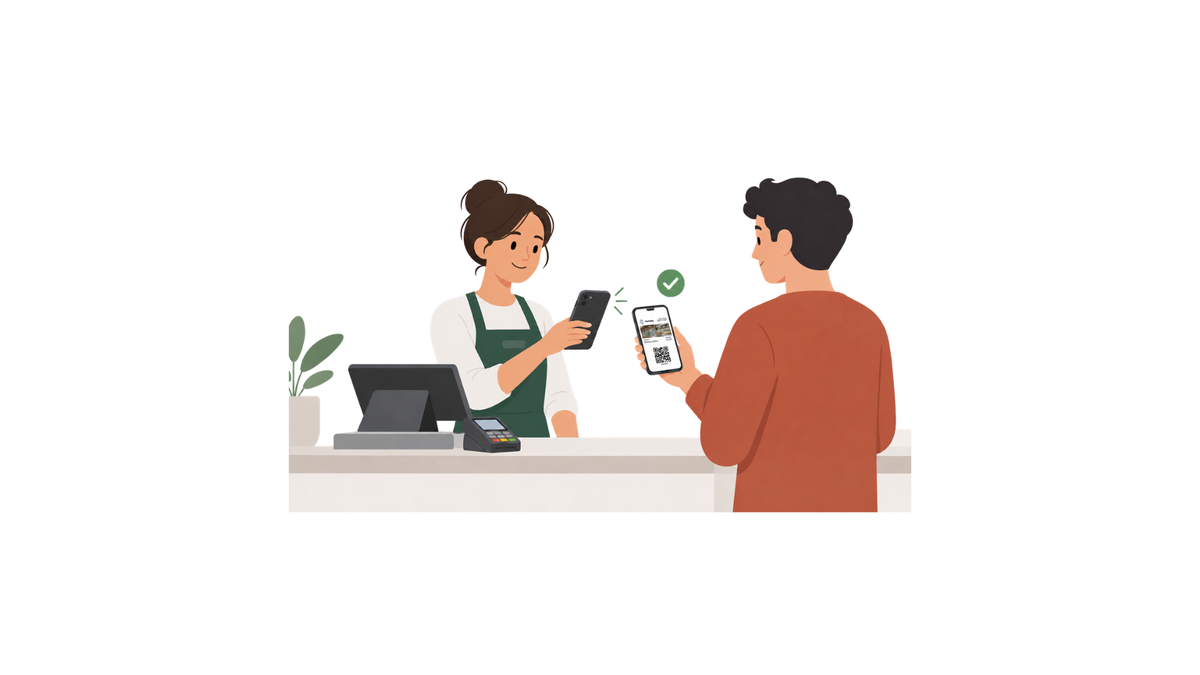
Why checkout speed and loyalty adoption clash in busy stores
At the register, two goals pull against each other. Managers want every transaction attached to a customer record. Cashiers want the line to move. Each extra question, lookup, or screen tap costs seconds, and seconds are the one thing a busy counter does not have. So loyalty quietly becomes optional: staff skip the prompt when there are four people waiting, and the program's numbers stall even though the software works fine.
Adoption usually fails for operational reasons, not attitude ones. If enrollment means typing an email, confirming a phone number, or switching apps, the process feels like extra work layered onto a job that is already timed. Teams on the floor control whether a customer is signed up, whether a reward is found, and whether the balance is accurate which is why frontline execution, not the technology, is where most digital loyalty programs lose momentum.
Scale sharpens the problem. Once you run more than one store, this becomes a question of multi-location, staff and customer management: the same prompt, the same scan, the same reward rules, measured per site and per shift.
The rest of this guide covers the practical side one-scan enrollment and reward lookup, short checkout scripts worth saying out loud, incentives that reward usage rather than sign-ups, and the manager follow-through that keeps numbers comparable across locations.
Make enrollment and reward lookup happen in one quick scan or tap
The fastest checkout loyalty flow has one rule: nothing happens twice. The customer presents a pass on their phone, the cashier scans it with the same scanner used for products, and that single action identifies the member, shows the points balance, and surfaces any reward ready to redeem. No sign-up form, no phone number keyed in at the terminal, no searching a customer list while three people wait.
That is why scannable digital passes stored in Apple Wallet and Google Wallet do the heavy lifting. There are no physical cards to reprint or forget, and no app download to negotiate mid-transaction. Enrollment can be a QR code on the counter, the receipt, or a card the customer taps the pass lands in the wallet in seconds, and from the next visit forward it is simply another barcode to scan.
Timing matters as much as technology. The right moment to ask is while items are being scanned or bagged before payment is authorized, not after the card reader is live. One short question works: whether they are already a member, and whether they want to use a reward today. Interrupting a completed payment to backfill points is what creates queues and awkward voids.
The operational payoff is measurable. Fewer manual lookups means fewer mistyped phone numbers, fewer mismatched accounts, and fewer rewards that expire unclaimed because no one checked. It is also easier to repeat: when the gesture is identical at every counter, multi-location, staff and customer management becomes a matter of one trained motion rather than one procedure per store.
Document that motion in a single line scan the pass, read the prompt on screen, redeem or earn — and test it on your busiest hour, not a quiet Tuesday.
Use short staff scripts that fit a busy checkout flow
The fastest way to lift loyalty usage at the till is to give staff three sentences, not a training manual. A prompt that takes two seconds gets said on a Saturday afternoon. A paragraph about tiers and point values does not.
Keep one line for each moment in the transaction:
- Enrollment: "Are you a member of our rewards program? It takes one scan."
- Earning: "You'll earn points on today's purchase."
- Redemption: "You've got a reward available want to use it today?"
That's it. No benefit pitch, no explanation of how points convert, no apology for asking. If a customer wants detail, the cashier answers then otherwise the line keeps moving. Scripts that sound forced usually fail because they were written to sell the programme rather than to close the transaction.
Two practical rules make these stick. First, tie each prompt to a physical step the cashier already performs, so asking about membership happens while the items are scanning, and the reward question happens before the total is read out. Second, write them down once and use the same wording in every store. Standardized phrasing is the quietest part of multi-location staff and customer management: identical prompts mean identical data, and you can compare enrollment rates between branches without wondering whether one team simply asks more often.
Consistent prompting also fixes measurement. A scannable digital pass only records a purchase, a reward claimed, or a repeat visit if someone scans it, so unasked questions show up later as gaps in the numbers. When every location opens with the same question and the pass gets scanned on a phone in a second, the resulting history reflects actual customer behaviour rather than staff habit.
Keep usage consistent with incentives, training, and manager coaching
Software doesn't ask the question at the counter. A pass only gets scanned if the person at the register remembers to offer it during a rush, which is why frontline execution not the platform is where most loyalty programs quietly stall. Staff control enrollment, reward accuracy, and whether the customer leaves knowing what they earned.
Incentives work best when they reward correct use, not raw sign-up counts. Paying per enrollment produces fake emails and abandoned accounts. Tie the reward to behavior you actually want: scan rate on total transactions, percentage of returning customers identified before payment, or redemptions processed without a manager override. A small shift-level bonus for the team that hits a scan-rate target beats an individual contest that turns checkout into a sales pitch.
Training should be short, repeated, and anchored to the exact moment it happens. One 45-minute onboarding session is forgotten by week two. Instead, drill two or three lines until they're automatic asking whether the customer is already a member, confirming a reward is available today, and stating what this purchase earns. Run them live at the counter during a slow hour, not in a back room. New hires get the same two questions on day one; everyone else gets a 60-second refresher at pre-shift.
Managers are the control layer. Without someone checking, standards drift store by store within a month. Give each manager one weekly habit: pull scan rate and rewards claimed for their location, compare it to the group, and name the specific shift where it dropped. That turns multi-location staff and customer management from a guessing game into a short conversation about one number.
Keep the reporting simple enough that a busy manager actually opens it. The dashboard reports passes generated and rewards claimed, which gives a per-location baseline to coach against though any system works here as long as managers review the same metric on the same day each week.
What staff and store managers usually ask before rollout
Does loyalty actually slow down the line? It can, if enrollment requires typing an email, a phone number, and a confirmation code at the register. Time the workflow yourself during a busy hour: count the seconds between "are you a member?" and the receipt. The target is one scan or tap a pass in Apple Wallet or Google Wallet that the cashier scans to identify the customer, apply points, and redeem a reward in the same action. If enrollment, lookup, and redemption are three separate screens, that's the part to fix, not the staff.
What if customers don't want another step? Keep the ask to one sentence "Are you a member of our rewards program?" and "You'll earn points on today's purchase" and make joining take no form-filling or app download. A digital loyalty program that drops a pass straight into the phone's wallet removes the "I'll do it later" moment.
Staff forget to ask, or only ask regulars. That's a prompt problem. Put the question in the payment step itself so it appears for every transaction, not just the ones staff remember. Post the two lines near the terminal for the first month.
How do managers keep several stores consistent? Use one configuration same reward rules, same pass design, same prompts then review per-location numbers weekly. Multi-location, staff and customer management works when it's measured, not supervised constantly.
How do we know it's working? Track three numbers by location and by shift: enrollment rate per transaction, reward redemptions, and repeat visits among pass holders. A store far below the others usually has a workflow gap, not a motivation gap.
If you want to see how scannable passes for Apple Wallet and Google Wallet fit into your checkout flow, start free with Loyaltify and set up your first pass in minutes.