
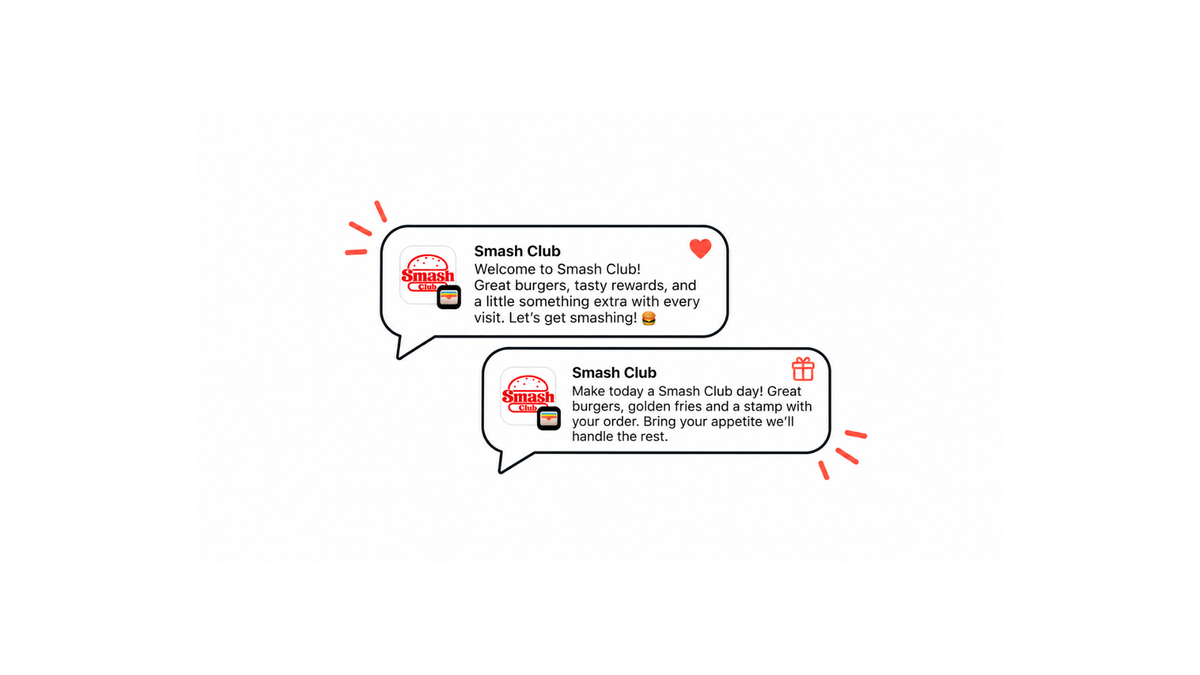
Every loyalty message should answer three questions: what happened, what it means for the customer, and what they can do next. “Your balance has been updated” is just a fact. “You're two visits away from a free coffee scan your card on your next order” is a reason to come back.
Four moments carry most of the weight in a digital loyalty program: joining, getting close to a reward, earning one, and going quiet after a run of regular visits. If you're running your program with Loyaltify, building your message plan around these four moments is the strongest place to start.
Send frequency is the harder question, and the honest answer is this: it's set by customer behavior, not by a calendar. A brand-new member and a customer who hasn't stopped by in two months need different rhythms. That's exactly why notifications and reporting matter. Open rates, redemption rates, time between repeat visits, and unsubscribes are the four core numbers that tell you whether your cadence is working or starting to wear customers out.
What every loyalty message should include
Every message you send should answer three questions, in order: what happened, what it means for the customer, and what they can do next. The structure works because it takes the guesswork out. “Your 8th stamp is on your card. Two more and your next coffee is on us. Show your card at the counter” answers all three in under twenty words.
Brevity beats cleverness
A customer reads a lock-screen notification in about a glance. One or two short sentences with a concrete number will always outperform a paragraph of warm but lengthy copy.
Tone should fit the moment
A welcome message confirms the card was added to the wallet and explains how stamps are earned. A progress message states the gap to the reward. A reward message says what's available and how long it lasts. A win-back message acknowledges the customer's absence without guilt-tripping.
Keep useful updates separate from offers
Balance changes, expiry warnings, and earned rewards are information the customer already asked for by joining the program. A seasonal discount is marketing. Mixing the two teaches people to ignore both.
In a digital loyalty program with no physical card, the card itself carries the balance. With Loyaltify, the digital card lives in the customer's phone wallet, so the notification's only job is to point the customer back to it. That makes keeping messages short much easier.
Sample message templates by visit stage
Each message below answers the same three questions: what happened, what it means for the customer, and what they can do next. Keep each one under about 160 characters so it reads comfortably on a lock screen and next to the digital card.
New member: a few minutes after signup
“Welcome to [Business]! Your card is in your wallet. Buy 9 coffees, get the 10th on us. Your first stamp is already on it.”
Confirm the benefit and the next step in a single line. A delay here is the most common reason a new member never comes back.
Active regular: when a stamp or point is earned
“Nice that's 7 of 10 stamps. Three more visits and your free coffee is ready.”
Progress is more powerful than promotion. No discount is needed, because part of the reward has already been earned.
Reward ready: the moment it unlocks
“Your free coffee is unlocked. Open your card and show the code at the counter. No expiry date.”
Say exactly how to redeem the reward. Vague phrases like “enjoy your reward” push redemption to a later visit, or to never.
Lapsed customer: after a quiet period
“We haven't seen you in a while. Your 6 stamps are still saved pick up where you left off whenever you're nearby.”
Be helpful, not pushy. Nothing is being taken away, which gives the customer a reason to act without feeling pressured.
How often to send loyalty messages based on customer behavior
There's no single right cadence. The real question is what the customer has done recently, because behavior tells you how much attention you've earned. For most small businesses, four groups are enough:
| Customer group | What to send | How often |
|---|---|---|
| New members | A welcome message explaining how the program works, then a reminder if they haven't returned | Once at signup, then once at the end of a typical purchase cycle |
| Active regulars | Points earned, stamps remaining | A weekly progress update rarely feels like too much |
| At-risk customers | A reminder of what they already have, not a flood of offers | Once every two to four weeks |
| Lapsed customers | One or two win-back messages | A few weeks apart; stop if there's no response |
Someone who used to visit four times a month and has dropped to once is an “at-risk” customer. If two messages to a lapsed customer get no response, stop and use your reporting to confirm the segment has gone cold. With Loyaltify, every member's visit history is stored on their card, so you can see which group a customer falls into from the data instead of guessing.
In general email marketing, two to three sends a week is often cited as performing well. Treat that as a ceiling for bulk email, not a target for loyalty messages. Program messages should follow real customer activity.
Some messages ignore cadence rules entirely. An earned reward, a balance change, or an expiry within 48 hours should go out immediately, because the information is useless later.
Fatigue signals that tell you to slow down
Message fatigue doesn't show up as one bad send; it shows up as a pattern. Watch four things:
- Open rates or card views dropping across consecutive sends.
- Fewer rewards redeemed per message.
- Repeat visits flattening among members who used to come back regularly.
- Unsubscribes or deleted cards ticking up.
Any one of these on its own could be noise. But if two or three move in the same direction together, the problem isn't your wording it's your send frequency.
Weak program communication is one of the most common reasons loyalty programs underperform. The guide to loyalty messages that bring customers back makes the same point: the fix isn't a one-time setup, it's ongoing improvement against metrics like redemption rate and repeat visits.
Reporting is what separates a weak message from one that's sent too often. A single message that gets opened but drives no redemptions has a copy or offer problem. A message that performs well on the first send and drops on the second and third, with the same audience and the same offer, has a frequency problem. In that case, pause the sequence for two or three weeks before rewriting it.
Adjusting send frequency with notifications and reporting
Your message plan should change based on what customers actually do. Four numbers are enough to start: how many people open a message, how many redeem the reward it mentions, how many come back within a few weeks, and how many unsubscribe or delete the card. Review each moment separately rather than looking at one overall average. The welcome message, the progress update, the reward-ready alert, and the win-back reminder each have their own job, and usually one of them is carrying the others.
- Opened but not redeemed: the problem is the copy.
- Neither opened nor redeemed: the problem is most likely the timing. Try moving the message closer to the visit that triggered it.
FAQ: timing, wording, and send frequency
What separates a helpful update from a promotion?
An update reports something the customer did: a stamp added, a reward unlocked. A promotion asks the customer for something. Updates can go out automatically; promotions need a reason and a limit.
Does every milestone deserve a message?
No. Send one when a customer joins, gets close to a reward, earns a reward, and goes quiet. The silent milestones in between keep the important messages credible.
What should I do if open and redemption rates start falling?
Reduce send frequency before changing your copy, and let customers set their own notification preferences the same advice Campaign Monitor gives for email cadence. Treat redemption rate as your warning light.
When should I send the welcome message?
Within a few minutes of signup. The customer remembers the program at that moment and has just added the card to their wallet. A welcome message that arrives hours later loses its context.
How long should messages be?
Under about 160 characters, one or two sentences. Include a concrete number (“3 visits to go”) and a clear next step (“show your card at the counter”).
Should I add emoji to messages?
If it fits your brand voice, one is enough. An emoji shouldn't replace the number or the next step in the message; it should decorate the information, not hide it.
What day and time should I send?
For automatic messages, the answer is “right then”: when a stamp is added or a reward unlocks. For scheduled messages like win-backs, pick a time shortly before your customers' busiest visiting hours. The visit data in Loyaltify's reports helps you see those hours.
Should I offer a discount to a lapsed customer?
Usually not in the first message. Reminding the customer of the stamps they've already collected is often reason enough. If the second message also gets no response, you can try a small incentive and then stop.
When should I consider a customer “lapsed”?
Look at the customer's own rhythm rather than a fixed number of days. For someone who visits weekly, four quiet weeks is a long gap; for someone who visits monthly, two months is a more meaningful threshold.
Should rewards have an expiry date?
That's your call, but if there is one, state it clearly in the message and send a reminder 48 hours before it expires. If there's no expiry, say that too; “no expiry date” puts customers at ease.
What happens if customers turn off notifications?
The card stays in their wallet and keeps showing their balance. Watch the notification opt-out rate as a warning sign; if it's rising, review your send frequency.
How often should I review reports?
Once a month is enough. In Loyaltify's notifications and reporting view, review each message moment separately, rewrite the weakest one, and compare the results the following month.
How many message templates should I start with?
Four: welcome, progress, reward ready, and win-back. Don't add a fifth until these are working well.
Should my messages change when I switch from physical stamp cards to digital?
Yes, they can be shorter. Because the digital card already shows the balance, the notification's only job is to send the customer back to the card. And with Loyaltify, cards live in the phone wallet, so the problem of lost or forgotten cards disappears too.
Conclusion
The right loyalty message is short, includes a concrete number, and tells the customer the next step. The right send frequency depends on customer behavior, not a calendar. Start with four moments, track four metrics, and improve your weakest message every month.
Set up your digital loyalty program with Loyaltify and review your first month of results.